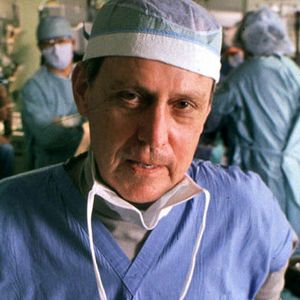
Thomas E. Starzl
A pure story of persistence, failure, and breakthrough—how one surgeon helped turn liver transplantation from an idea into a discipline.
Starzl Story
Picture an operating room where the plan is daring, the margins are thin, and the “standard of care” does not yet exist. In the early era of liver transplantation, surgeons did not inherit a manual. They built one by confronting catastrophic bleeding, infection, and rejection—then writing down what happened, brutally honestly, and going back to the table anyway [3].
In that world, Thomas Starzl became synonymous with the question that kept returning: could a failing liver be replaced in humans, and could the recipient’s immune system be persuaded to let that liver live? The story is not a clean, cinematic victory. It is a long sequence of risk, revisions, and incremental survival—until a new medical reality was forced into existence [1].
Before It Was Possible
The liver is not a quiet organ. It is a traffic hub for blood flow, metabolism, bile, toxins, clotting factors, and immune signaling. Early transplant attempts had to solve multiple “impossible” problems at once: how to remove a cirrhotic liver without exsanguination, how to implant a new liver and restore blood flow, and how to keep the body from destroying the graft afterward [4].
The failures that followed were not hidden. They were analyzed. The operation itself was refined, but the deeper enemy was immunology: rejection that arrived like a firestorm, and infections that took advantage of every inch of immunosuppression. Liver transplantation was teaching a harsh lesson: surgical brilliance alone could not win this war [5].
1963: The First Human Attempt
The historical record consistently points to Starzl’s first human liver transplant attempt in 1963. It was not the beginning of success; it was the beginning of proof-of-concept under human conditions—where physiology, bleeding, and immune response refused to behave like theory [3] [6].
One of the most important details of this era is not a single patient outcome, but the mindset: if early transplants failed, the conclusion was not “stop.” The conclusion was “learn exactly why.” That posture—treating failure as data—became a foundational ethic of transplant programs that still governs how complications are tracked, audited, and improved today [5].
Why Early Transplants Failed
Early deaths were often driven by three interlocking forces: bleeding (because cirrhosis breaks the clotting system), infection (because surgery and immunosuppression create vulnerability), and rejection (because the immune system views the graft as foreign). These forces interacted: more bleeding meant more transfusion and instability; more immunosuppression meant more infection; undertreated immunity meant rejection and graft collapse [5].
The key insight was that transplantation had to become a system, not an act. Operative technique, anesthesia, ICU management, antimicrobial strategy, and immune modulation needed to coordinate like gears. Starzl’s era helped create the concept of a “transplant team” as an integrated clinical machine—not simply a surgeon and an organ [2].
Cyclosporine Changes the Math
The story turns when immunosuppression becomes more reliably effective. Starzl and colleagues reported liver transplantation using cyclosporine and prednisone in the early 1980s, marking a pivotal step in making graft survival more predictable in clinical practice [7] [8].
This did not eliminate risk; it rebalanced it. With rejection more controllable, programs could standardize follow-up, drug-level monitoring, and protocols for complications. A procedure that once looked like a desperate experiment began to look like a real therapy: indicated, timed, executed, and managed longitudinally. That transition is part of why modern liver transplant care is now built around protocols rather than improvisation [9].
A Field Becomes a System
As the science matured, the language of transplantation matured with it: primary transplant, re-transplant, acute rejection, chronic injury, opportunistic infection, and survival curves. Starzl’s own historical writing on the evolution of liver transplantation captured how outcomes improved through cumulative refinements—surgical, immunologic, and organizational [5] [10].
The modern transplant center—multidisciplinary evaluation, structured listing decisions, standardized perioperative care, and long-term monitoring—was not “born finished.” It was assembled over decades. Starzl’s legacy is deeply tied to that assembly: the insistence that the transplant journey is a continuum, and that outcomes depend on the entire continuum, not a single day in the operating room [3].
What This Means for Patients
If you are awaiting transplant—or caring for someone who is—this story is not trivia. It explains why your center asks for strict medication timing, repeated labs, careful infection precautions, and consistent follow-up. Those “rules” were written in the hard ink of early complications and early losses, and they exist because today’s survival depends on preventing the same cascading failures [3].
A final, quiet truth: many people alive today after liver transplant are living inside a structure that once did not exist. Someone had to believe the structure could exist, keep refining it, and keep learning publicly. In that sense, Starzl’s story is less about one person and more about the birth of a discipline—built so patients could have another chance [1].
References
- Eghtesad B, et al. Thomas Earl Starzl, MD, PhD (1926–2017): Father of Modern Transplantation. (PMC)
- American Society of Transplant Surgeons (ASTS). In Memoriam: Thomas E. Starzl, MD, PhD (2017).
- Song ATW, et al. Liver transplantation: Fifty years of experience. (PMC)
- Klintmalm GB. The history of organ transplantation in the Baylor Health Care System. (PMC)
- Starzl TE, et al. Evolution of liver transplantation. Hepatology. 1982. (PubMed)
- VA Research. First successful liver transplant (historical milestone summary).
- Starzl TE, et al. Liver transplantation with use of cyclosporin A and prednisone. N Engl J Med. 1981. (PubMed)
- Starzl TE, et al. Liver transplantation, 1980, with particular reference to cyclosporin-A. Transplant Proc. 1981. (PubMed)
- Starzl TE, et al. Liver transplantation with use of cyclosporin A and prednisone. (Full text on PMC)
- Starzl TE. Evolution of Liver Transplantation. (PMC full text)