Hepatic Encephalopathy
Hepatic encephalopathy (HE) is a potentially reversible brain dysfunction that occurs when the liver can no longer detoxify waste products, allowing toxins—especially ammonia—to reach the brain. It is one of the most common and serious complications of advanced liver disease and a major reason patients are prioritized for liver transplantation.
What Is Hepatic Encephalopathy?
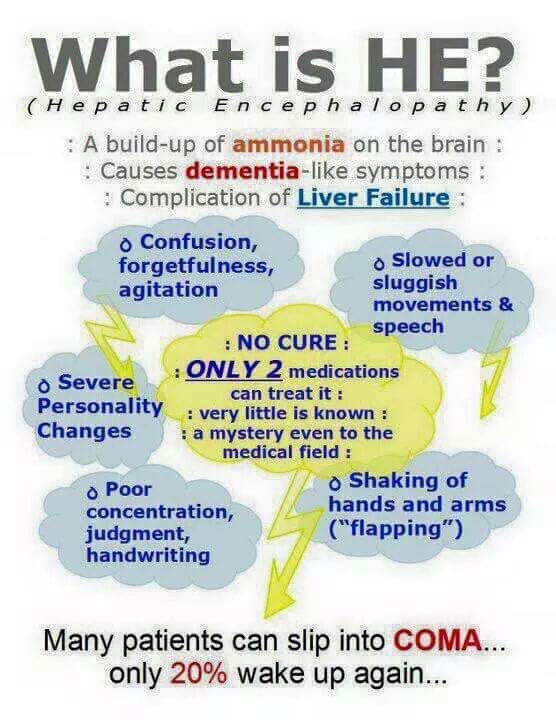
Hepatic encephalopathy (HE) represents a broad spectrum of reversible neuropsychiatric abnormalities seen in patients with significant liver dysfunction, ranging from mild attention deficits and sleep disturbance to profound confusion, stupor, and coma. It occurs when neurotoxins that are normally cleared by the liver accumulate in the bloodstream and cross the blood-brain barrier. HE is considered a hallmark of decompensated cirrhosis and significantly increases the risk of hospitalization and mortality. Early recognition and treatment can dramatically improve outcomes and quality of life.[1]
Pathophysiology – Ammonia and Beyond
In cirrhosis, impaired hepatocyte function and portosystemic shunting allow gut-derived toxins—primarily ammonia, but also mercaptans, false neurotransmitters, and inflammatory cytokines—to reach the brain. Ammonia is metabolized by astrocytes into glutamine, causing osmotic swelling and low-grade cerebral edema. This triggers oxidative stress, neuroinflammation, and disruption of GABA and glutamate neurotransmission. Systemic inflammation and gut dysbiosis amplify the process. Although blood ammonia is often elevated, levels do not always correlate with symptom severity; clinical assessment remains the gold standard.[1]
Symptoms & West Haven Stages
Symptoms often begin subtly and are first noticed by family members: reversal of sleep pattern, forgetfulness, difficulty concentrating, irritability, or apathy. As HE progresses, patients develop asterixis (flapping tremor), slurred speech, disorientation, and eventually coma. The West Haven criteria classify HE from Grade 0 (no abnormalities) to Grade 4 (coma). Minimal (covert) HE affects up to 40–60 % of cirrhotic patients and impairs daily functioning and driving safety even when the patient appears normal.[1], [5]
Common Preventable Triggers
Overt HE episodes are almost always precipitated by an identifiable trigger superimposed on underlying liver failure. The most frequent are infections (spontaneous bacterial peritonitis, urinary tract infection, pneumonia), gastrointestinal bleeding, constipation, dehydration from over-diuresis or diarrhea, electrolyte disturbances (especially hyponatremia and hypokalemia), and use of sedatives or opioids. Patient and caregiver education about these triggers and early reporting of symptoms can prevent many hospitalizations.[1]
Diagnosis & Monitoring
HE remains a clinical diagnosis of exclusion. The medical team performs a thorough history, neurological exam (looking for asterixis and altered consciousness), and systematic search for precipitants. Blood ammonia is supportive but neither sensitive nor specific. Other causes of altered mental status—stroke, sepsis, hypoglycemia, intracranial bleeding—must be ruled out. In patients with minimal HE, specialized psychometric tests (PHES, Stroop test) or critical flicker frequency can detect subtle deficits not apparent on routine examination.[1], [6]
Treatment & Long-Term Prevention
Treatment has two arms: (1) rapid identification and correction of the precipitating factor and (2) specific anti-HE therapy. Lactulose (titrated to 2–3 soft stools daily) remains first-line; rifaximin 550 mg twice daily is added for recurrent episodes. Protein restriction is no longer recommended—adequate nutrition is critical. In refractory cases, embolization of large portosystemic shunts may be considered. Liver transplantation is the only definitive cure and dramatically reverses HE in nearly all recipients.[1]
Safety, Driving & Caregiver Role
Even minimal HE impairs reaction time, judgment, and visuospatial ability to a degree comparable with blood alcohol levels above legal limits. Driving is contraindicated until the transplant team confirms full resolution. Caregivers are indispensable: they detect early personality or cognitive changes, ensure lactulose/rifaximin adherence, monitor bowel movements, and bring the patient urgently to medical attention when symptoms appear. Educated caregivers dramatically reduce hospital admissions and improve survival.[1]