“The Beta-Blocker Decision”
A short, realistic story about nonselective beta-blockers (NSBBs)—what they do, when they help, when they can harm, and how transplant teams think about them in cirrhosis [1][2][3].
The Clinic Visit
Jordan has cirrhosis and comes to clinic after an endoscopy showed esophageal varices. The hepatologist speaks plainly: “Varices bleed because portal pressure is high. We reduce that pressure, and we reduce the chance of a dangerous bleed.” [1][4]
“You have two proven prevention options: medication with a nonselective beta-blocker, or endoscopic band ligation. Sometimes we use both—especially after a bleed.” [1][2]
Jordan’s blood pressure is borderline low, and there has been a recent hospitalization for ascites. The hepatologist adds a second sentence that matters just as much: “These meds help many people, but they are not ‘set and forget.’ We reassess them constantly.” [3][5]
What NSBBs Actually Do
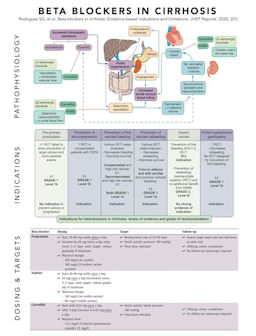
Jordan’s team explains that nonselective beta-blockers block both β1 and β2 receptors: β1 blockade lowers heart rate/cardiac output; β2 blockade reduces splanchnic (abdominal) blood flow. Less inflow into the portal system generally means lower portal pressure and fewer bleeds [1][2].
Then the clinician says something newer that surprises Jordan: “In some compensated patients with clinically significant portal hypertension, NSBBs—especially carvedilol—may also reduce the risk of first decompensation.” [6][7][8]
Choosing the Drug
The prescription choice isn’t random. The team outlines the practical differences:
Targets and Monitoring
Jordan asks, “What number are we aiming for?” The answer is nuanced: teams generally titrate toward a tolerated physiologic response (often resting HR around 55–60 bpm), while avoiding symptoms of low blood pressure or kidney stress [2][3].
When to Hold or Reduce
Jordan’s team is direct: “There are times NSBBs can tip someone into harm—especially in advanced decompensation.” Situations that commonly trigger a hold/reduction include significant hypotension, acute kidney injury, sepsis, or severe volume depletion [3][5].
Red Flags to Call Your Team Immediately
- Fainting/near-fainting, new confusion, or extreme weakness
- Very low blood pressure or very slow pulse (especially with symptoms)
- Fever, suspected infection, vomiting blood, black stools
- Decreased urine output or sudden rise in creatinine
These are precisely the moments where your transplant/hepatology team may temporarily adjust NSBBs [2][3].
How Transplant Teams Think About NSBBs
Jordan is also being evaluated for transplant. The clinician frames NSBBs as “a bridge tool”: they can reduce catastrophic bleeding risk while you optimize nutrition, physical conditioning, and follow-up. But the medication plan is dynamic—especially during acute illness or the peri-transplant window [2][3].
“Our goal is stability. NSBBs can help you stay stable—but only if they remain safe for your kidneys and blood pressure.” [3][5]
Medical Disclaimer
This page is educational only and does not replace individualized medical care. NSBB decisions (start, stop, titrate, switch agents) must be made by your hepatology and/or transplant team based on your blood pressure, kidney function, ascites status, bleeding history, and overall clinical trajectory [1][2][3].
References
- AASLD. Portal Hypertension Bleeding in Cirrhosis (Practice Guidance page). Verified guidance page
- AASLD Practice Guidance on risk stratification and management of portal hypertension and varices in cirrhosis (Hepatology 2024) — PubMed. PubMed
- Practical risk/benefit framing for NSBBs in advanced cirrhosis (review) — PubMed Central. PMC full text
- Baveno VII consensus (Journal of Hepatology full text) — NSBBs and portal hypertension recommendations. Full text
- EASL Clinical Practice Guidelines: management of patients with decompensated cirrhosis (2018) — full text. Full text
- PREDESCI trial (β-blockers to prevent decompensation in CSPH) — The Lancet (abstract page). Trial page
- Baveno VII consensus (PMC mirror) — NSBBs (including carvedilol) for prevention of decompensation in CSPH. PMC full text
- Review emphasizing carvedilol/NSBB strategy in the Baveno VII era (Liver International 2023). Journal page